

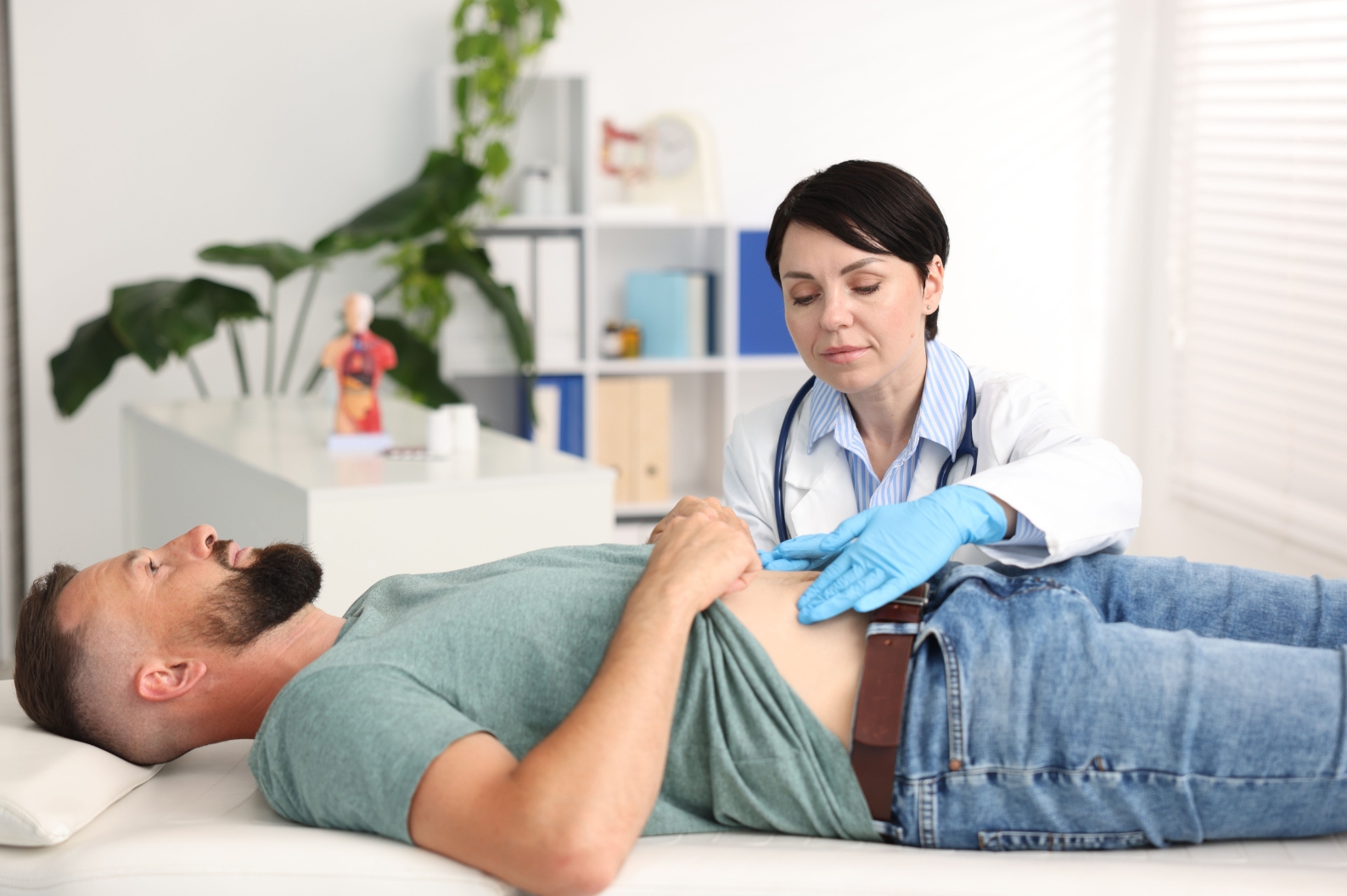
Peptic Ulcers
Understanding the Causes, Symptoms, and Treatment Options
An ulcer is an open sore that develops on an internal surface of the body. In the digestive system, ulcers occur when the protective lining of the stomach, esophagus, or small intestine becomes damaged and fails to heal properly.
At InfiniHealth Medical Group, our gastroenterology specialists diagnose and treat peptic ulcers using advanced testing and personalized treatment plans designed to relieve symptoms and promote healing.
Types Of Ulcers
Peptic ulcers occur within the digestive tract and are categorized based on their location.
Duodenal Ulcers
Open sores that develop in the first section of the small intestine (the duodenum).
Gastric Ulcers
Ulcers that form on the inner lining of the stomach.
Esophageal Ulcers
Open sores found in the lining of the esophagus, the tube that carries food from the mouth to the stomach.
Each type of ulcer may cause similar symptoms but may require slightly different treatment approaches depending on the location and underlying cause.


What Causes Peptic Ulcers
Signs & Symptoms
The most common symptom of a peptic ulcer is abdominal pain, often caused by irritation from stomach acid.
This pain may:
-
Occur between the breastbone and the navel
-
Feel better temporarily after eating or taking acid-reducing medication
-
Worsen when the stomach is empty
-
Occur at night
-
Come and go over time
Other possible symptoms include:
-
Bloating or indigestion
-
Nausea or vomiting
-
Changes in appetite
-
Unexplained weight loss
-
Fatigue
More serious symptoms may include:
-
Dark or black stools
-
Vomiting blood or material that resembles coffee grounds
-
Rectal bleeding
These symptoms require immediate medical attention.
How Ulcers Are Diagnosed
To diagnose a peptic ulcer, physicians may recommend several diagnostic tests, including:
-
Upper endoscopy, which allows doctors to directly view the digestive tract
-
Capsule endoscopy to examine areas of the small intestine
-
Tests for H. pylori, including breath, blood, or stool tests
-
Upper gastrointestinal (GI) series, which uses imaging to evaluate the digestive tract
These tests help determine the location of the ulcer and identify its underlying cause.
Treatment Options
Treatment for peptic ulcers depends on the underlying cause.
Common treatments include:
Antibiotics
Used to eliminate H. pylori infection.
Proton Pump Inhibitors (PPIs)
Medications that reduce stomach acid and help the lining heal.
H-2 Blockers
Acid-blocking medications that reduce stomach acid production.
In many cases, ulcers heal once the cause is treated and stomach acid levels are controlled.
Refractory Ulcers
Some ulcers may not heal as expected and are known as refractory ulcers.
Possible causes include:
-
Antibiotic-resistant H. pylori bacteria
-
Chronic use of pain-relief medications
-
Smoking or tobacco use
-
Excess stomach acid production
-
Other conditions such as Crohn’s disease
Treatment may involve different medications, lifestyle adjustments, or additional testing to determine the underlying cause.
Take the Next Step
Frequently Asked Questions
What services does InfiniHealth offer?
InfiniHealth provides comprehensive care across nine medical specialties: spine care, orthopedic care, sports medicine, pain management, urology, gastroenterology, radiology, vascular care, and primary care.
Where are your locations?
InfiniHealth proudly serves patients at five locations throughout New Jersey: West Orange, Clifton, Woodland Park, Hackensack, and Elizabeth.
What insurances do you accept?
We are In-Network with Horizon Blue Cross Blue Shield and Medicare. If you have out of network benefits, we accept all commercial insurance plans and will work with you to maximize your coverage.
How do I make an appointment?
You can schedule an appointment by calling us at (908)315-9055 or using our online booking form.
Do you offer same-day or urgent appointments?
Same-day appointments may be available depending on location and specialty. Please call to check availability.
What conditions do you treat?
From back pain, joint injuries, and sports-related issues to gastrointestinal conditions, vascular problems, and chronic pain, our specialists are trained to handle a wide range of health concerns.