


Relief from Foraminal Stenosis Starts with the Right Care
What Is Foraminal Stenosis?
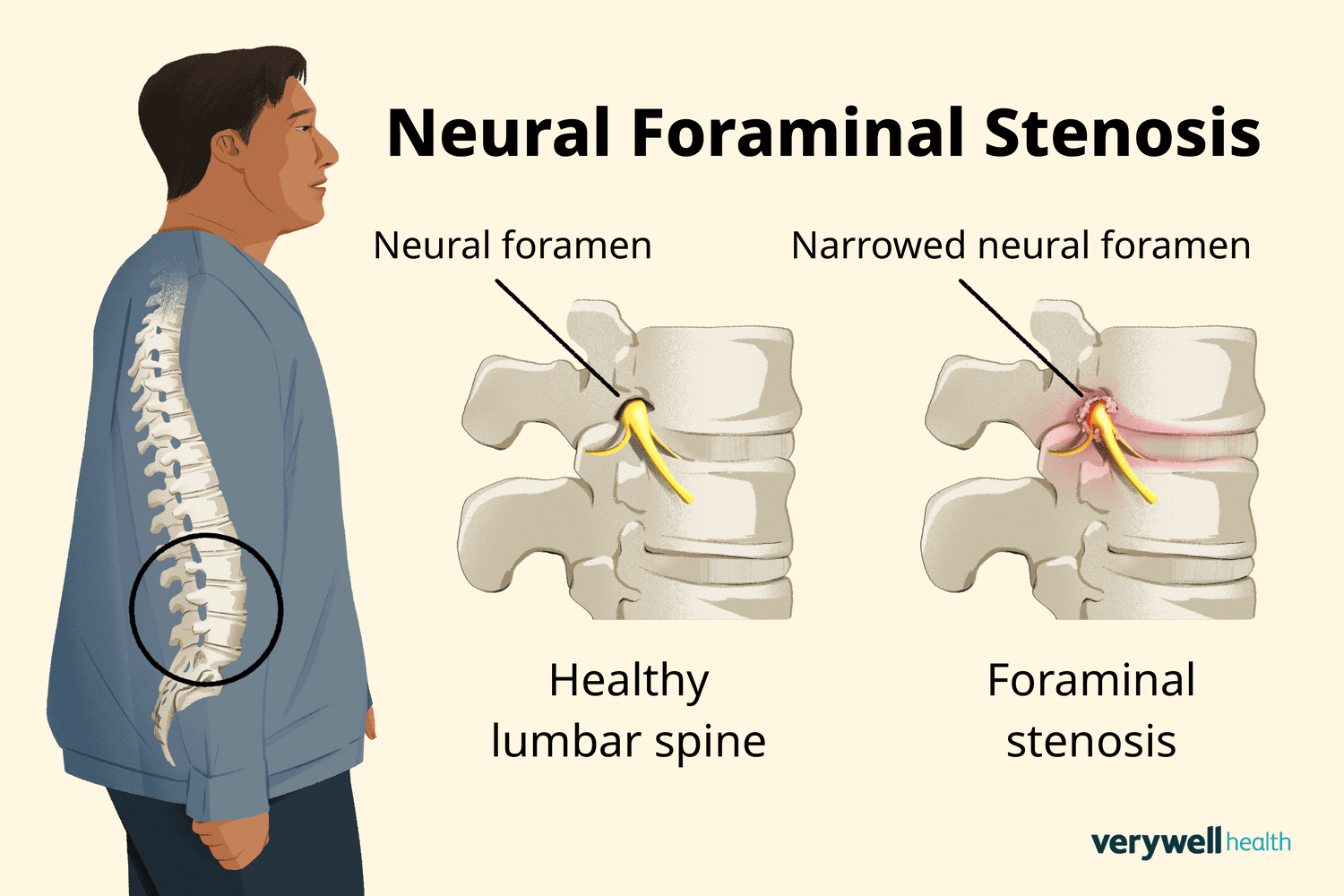
Foraminal stenosis occurs when the small openings in the spine — called foramina — narrow and compress the spinal nerves that pass through them. These nerves control sensation and movement throughout the body.
While some people experience mild symptoms, others develop significant pain or neurological issues depending on the location and severity of the compression.
Early diagnosis is key to preventing worsening symptoms and long‑term nerve damage.
Symptoms of Foraminal Stenosis
The symptoms of foraminal stenosis vary based on where the nerve compression occurs:
Cervical Spine (Neck):
-
Neck pain radiating to the shoulders or arms
-
Arm weakness
-
Tingling or numbness in the hands or fingers
Lumbar Spine (Lower Back):
-
Lower back pain spreading to the hips, thighs, or buttocks
-
Burning or tingling sensations in the feet or toes
-
Difficulty standing or walking for long periods
-
Leg weakness or balance issues
What Causes Foraminal Stenosis?
Foraminal stenosis is commonly associated with age‑related changes in the spine, but several factors may contribute, including:
-
Degenerative Conditions: Arthritis, disc degeneration, facet joint disease
-
Herniated or Bulging Discs: Disc material pressing into the nerve opening
-
Spinal Injuries or Trauma: Accidents or falls altering spinal structure
-
Genetic Factors: Naturally narrower foramina
-
Lifestyle Factors: Obesity, smoking, and prolonged inactivity
At InfiniHealth, we focus on identifying the exact cause to guide effective treatment.
From Conservative Care to Advanced Procedures — We’ve Got You Covered

Conservative Treatment for Foraminal Stenosis
Many patients find relief with non‑surgical approaches, especially in early or moderate cases:
-
Pain Medications: Anti‑inflammatory medications or analgesics
-
Physical Therapy: Strengthening and stretching to improve spinal stability
-
Bracing: Temporary support to reduce strain on affected areas
These treatments aim to relieve pressure on the nerves and improve daily function.
Advanced Minimally Invasive Treatment Options
When conservative care is not enough, InfiniHealth Medical Group offers cutting‑edge, minimally invasive spine procedures with shorter recovery times:
Endoscopic Foraminoplasty
Removes bone or tissue narrowing the foramen using a tiny incision and HD camera. Many patients resume activity within weeks.
Endoscopic Laminotomy
Relieves nerve compression by removing small portions of the lamina while preserving spinal stability. Often performed as an outpatient procedure.
Endoscopic Discectomy
Removes herniated disc material compressing the nerve through a minimally invasive approach, allowing faster return to work and daily activities.
What to Expect After Treatment
Most patients experience noticeable pain relief shortly after treatment. Mild soreness at the incision site is normal and typically resolves within days. Our specialists provide detailed post‑procedure care instructions and rehabilitation guidance to support a smooth recovery and long‑term results.
Alleviate Pain. Restore Mobility.
You don’t have to live with the limitations of foraminal stenosis. At InfiniHealth Medical Group, we’re committed to delivering personalized care using advanced, minimally invasive techniques designed to help you move comfortably again.