

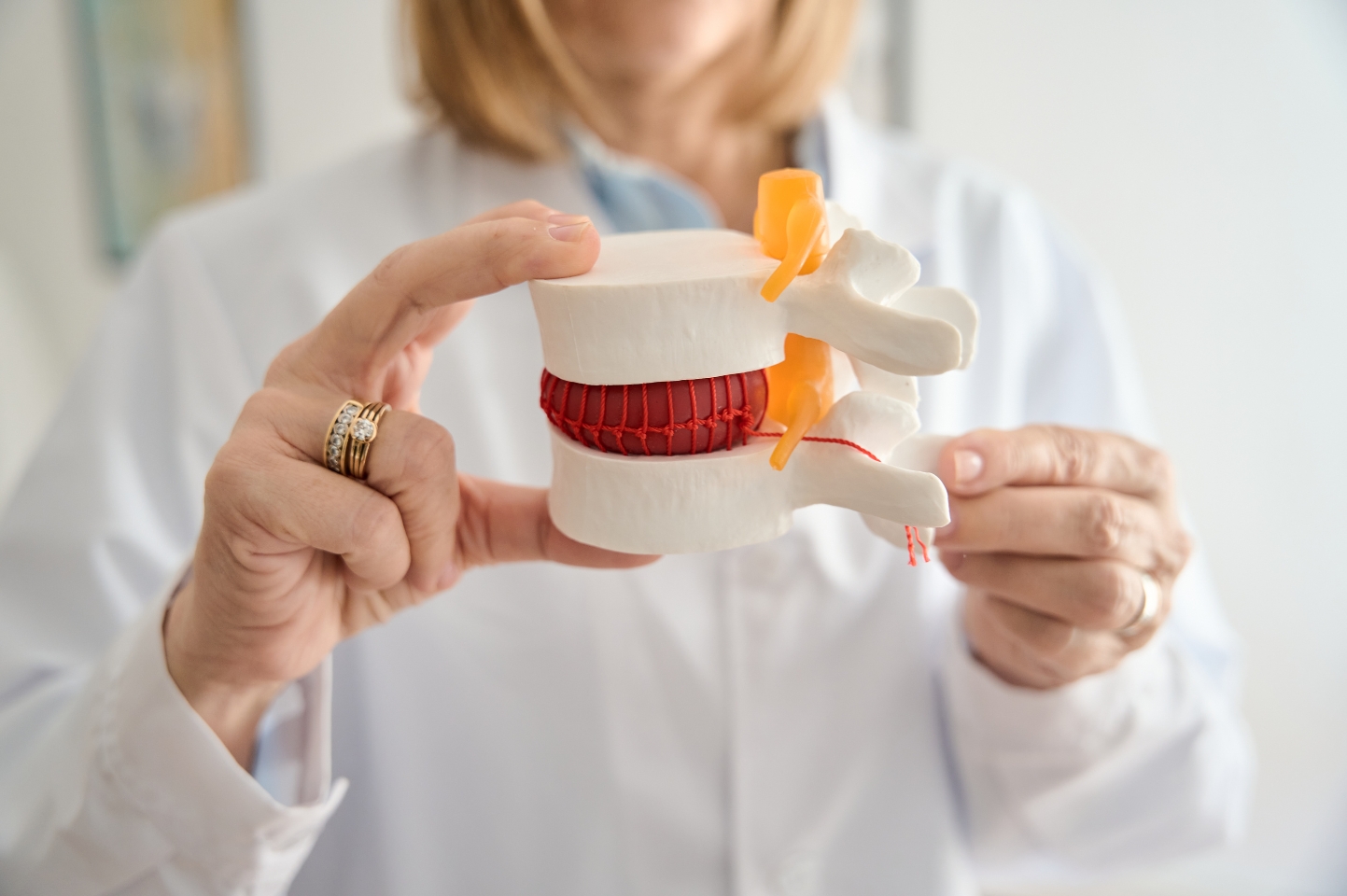
What Is a Bulging or Herniated Disc?
What Causes a Bulging or Herniated Disc?
Discs degenerate over time due to wear and tear, making them more vulnerable to bulging or rupture. Common contributing factors include:
-
Aging: Loss of disc hydration and elasticity makes discs more prone to damage.
-
Poor posture: Slouching, improper lifting, and extended sitting strain the spine.
-
Injury: Sudden trauma or repetitive strain from sports or lifting.
-
Occupational stress: Physically demanding jobs accelerate spinal wear.
-
Genetics: Some individuals are predisposed to disc degeneration.
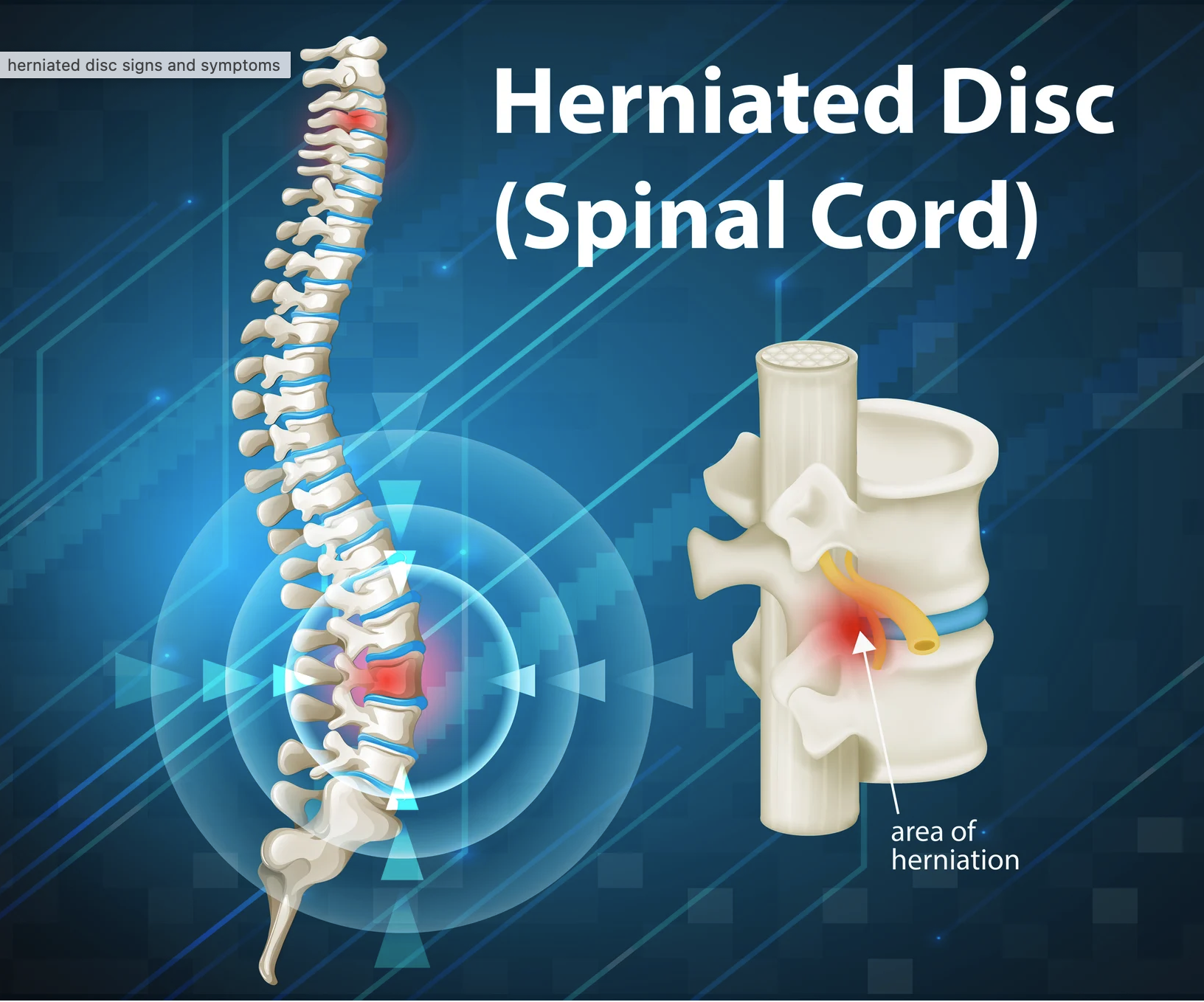
Types of Bulging or Herniated Discs
-
Contained Disc Herniation
The disc begins to bulge outward, but the inner gel-like nucleus stays within the outer layer (annulus fibrosus). This can still cause nerve pressure and pain without a full rupture. -
Extruded Disc Herniation
The inner nucleus pushes through a tear in the annulus and protrudes into the spinal canal—but remains attached to the main disc. This stage often results in more noticeable symptoms. -
Sequestered Disc Herniation
In the most advanced stage, the nucleus material not only breaks through but also separates completely, moving freely within the spinal canal. This can cause significant nerve compression and inflammation.
Other Causes of Bulging/Herniated Discs
Aging:
As discs lose moisture and flexibility with age, the outer layer can weaken—making them more prone to bulging, herniation, or loss of height, which affects surrounding joints and nerves.
Physical Strain & Occupation:
Jobs involving repetitive motion, heavy lifting, or poor posture place ongoing stress on the spine, increasing wear and tear on the discs.
Injury & Trauma:
Car accidents, sports injuries, or improper lifting can cause sudden disc damage or start a degenerative process that leads to herniation.
Posture Habits:
Poor posture while sitting, working, or lifting puts strain on the spine over time, accelerating disc degeneration and increasing injury risk.
Genetics:
Some people inherit weaker spinal structures or a tendency toward disc degeneration, making them more vulnerable to spinal issues.

Minimally Invasive Procedures
Minimally Invasive Procedures
When conservative treatments aren’t enough, we offer advanced, low-impact procedures:
Percutaneous Discectomy:
A small device removes disc material under live X-ray guidance to decompress the nerve.
Endoscopic Discectomy:
Through a tiny incision (under ¼ inch), our surgeon uses a camera-guided scope to directly address the herniation, without cutting muscle or bone.
Patients typically resume light activities within days, with full recovery in weeks.

Get Back to Living Without Limits
If you’re struggling with back, neck, or leg pain, don’t wait. A bulging or herniated disc can worsen without proper treatment.
InfiniHealth Medical Group offers accurate diagnosis, compassionate care, and advanced solutions to help you return to the life you love—with less pain and more freedom.
📞 Call today to schedule your consultation with one of our specialists.